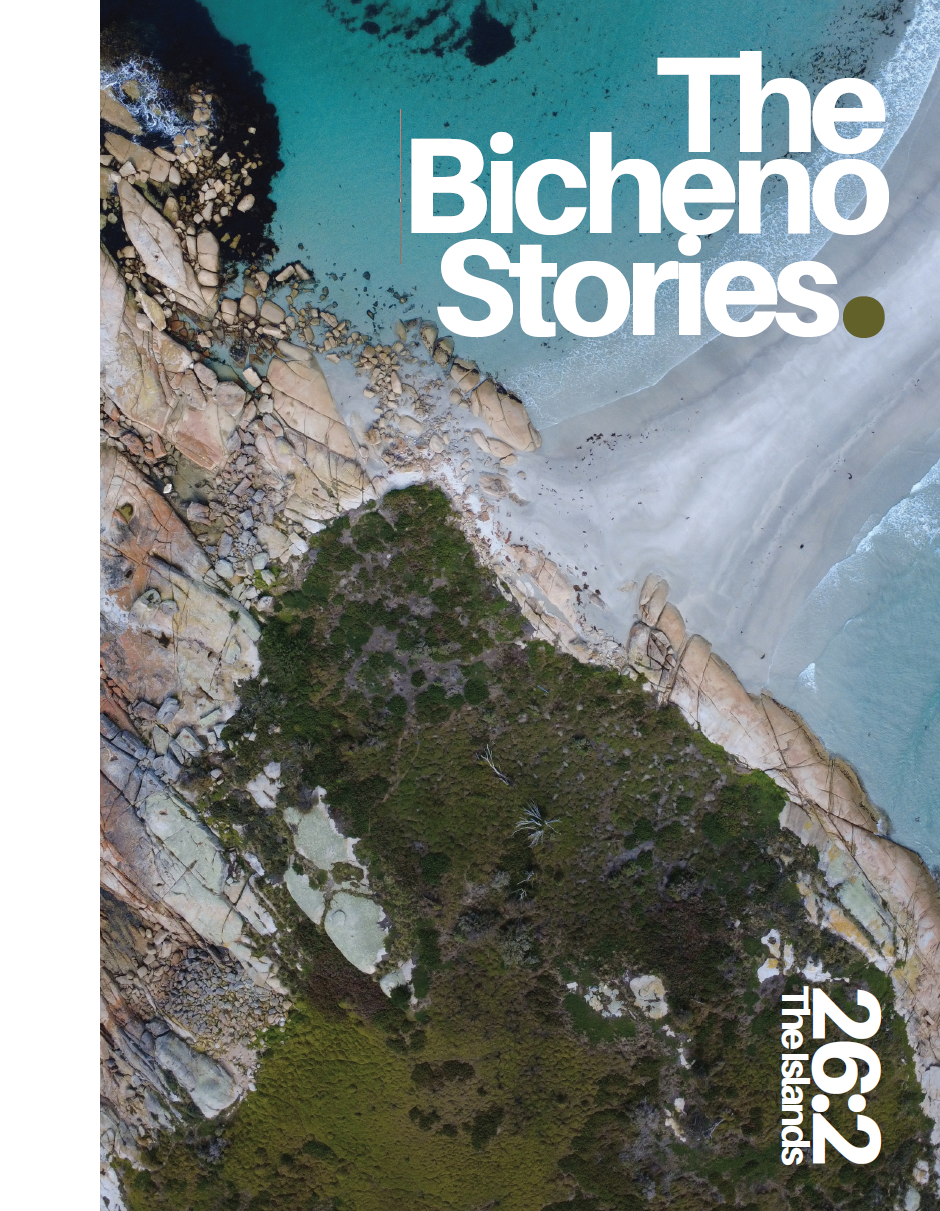
Current issue: 26.2
This edition begins beyond the shoreline, where Governor Island and Diamond Island sit against the Tasman Sea, quietly shaping the waters around them as they have for thousands of years.
Beginning at Whalers Lookout, we follow the swell, the geology and the stories that reveal how these ancient islands helped create the harbour, the beaches and ultimately the town itself. Along the way, deep time meets memory, science meets story, and the landscape emerges not as backdrop, but as a force in the making of place.
We journey through Palawa knowledge and history, revisit the fury of Cyclone Yolande, and step inside Le Gulch, where a harbour building continues its long conversation with the sea. In Governor, our short story for this edition, grief and love move quietly through a family living beneath the watch of the island that gives the story its name.
Together, these pages explore the enduring relationship between land, sea and memory, and the ancient islands that continue to gather the sand, bend the swell and hold Bicheno in their care.
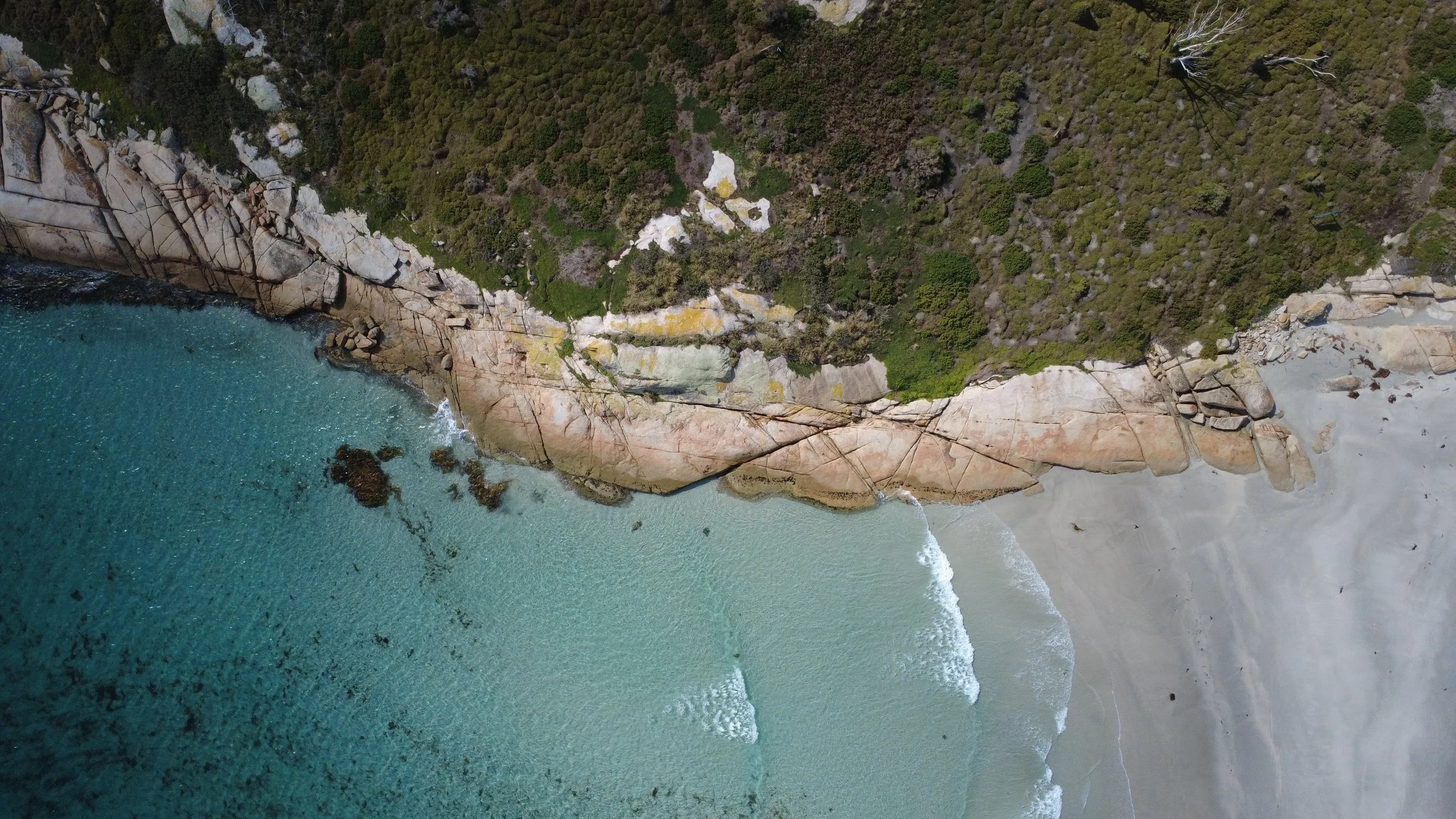
WELCOME EDITORIAL
Inspired by a quiet swim at Waubs Bay, Adam Martin (Editor) reflects on the islands that sit beyond Bicheno's shoreline and the questions they continue to inspire. What began as a fleeting moment in clear water becomes a journey through deep time, exploring how Governor Island and Diamond Island have shaped the coastline, softened the force of the Tasman Sea and helped create the sheltered waters upon which the town was built. Weaving together personal reflection, geology, coastal science, Palawa history and imagination, the editorial considers the enduring relationship between landscape and memory, and why certain places seem capable of holding generations of stories within them. At its heart, it is an invitation to slow down, pay attention and rediscover the wonder that emerges when we allow a place to reveal itself beyond the surface.
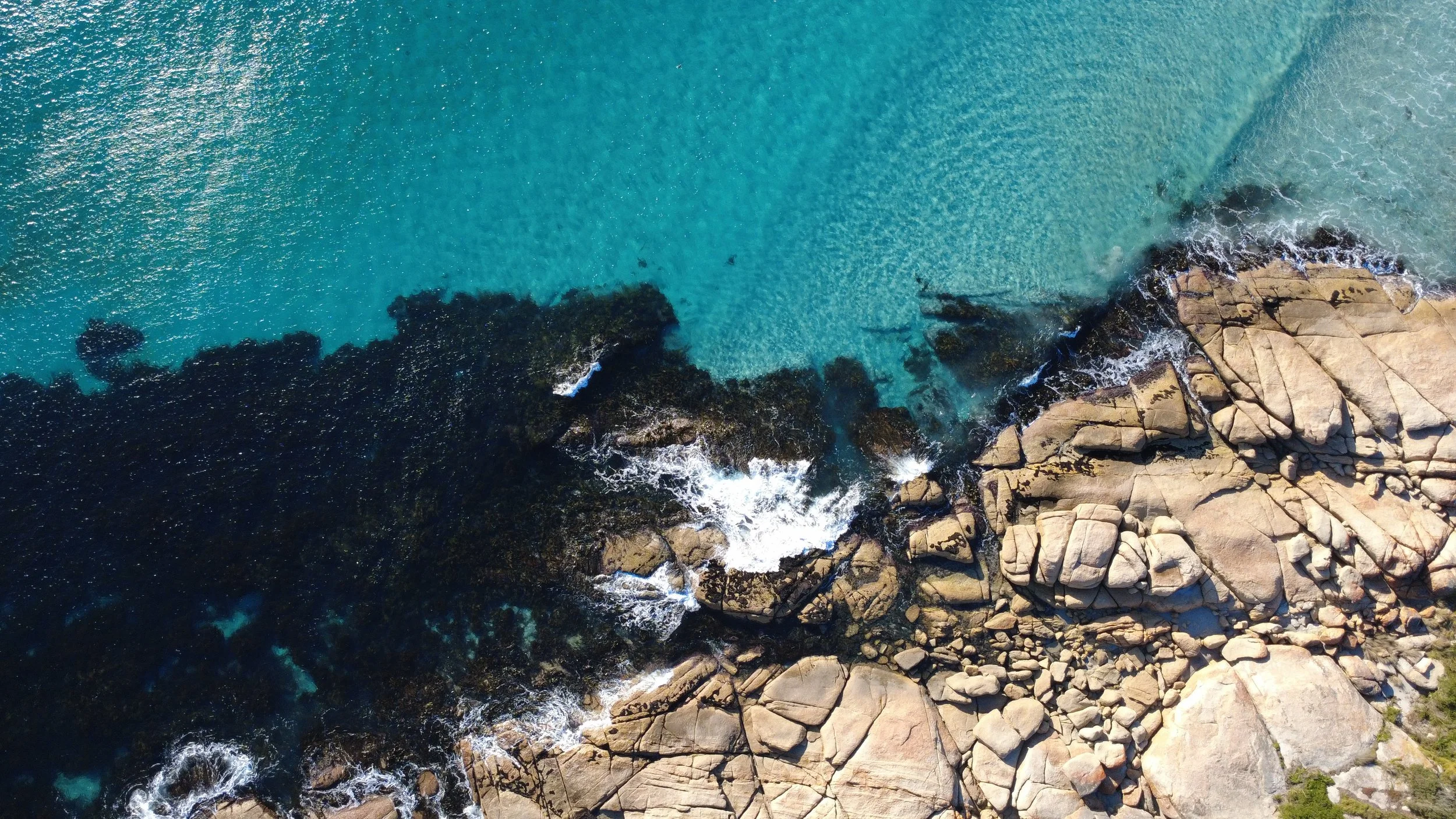
PHOLDING THE LINE - Editorial
Beginning with a climb to Whalers Lookout and extending far beyond the visible horizon, this feature-length essay explores the ancient relationship between Governor Island, Diamond Island and the coastline they have quietly shaped for thousands of years. Blending geology, oceanography, climate history, Palawa knowledge and personal reflection, the story traces how two seemingly modest granite outcrops transformed a stretch of exposed coastline into a place of shelter, return and belonging.
Along the way, readers journey through deep time, from the Devonian origins of the granite itself to a world before Bass Strait, when Tasmania remained connected to mainland Australia and the islands were simply higher ground within a much larger landscape. The essay examines the rise of the sea following the last Ice Age, the formation of the modern coastline, and the remarkable coastal processes that continue to bend swell, gather sand and shape the sheltered waters of Waubs Bay and the Gulch.
Moving between science and story, the piece also reflects on the enduring relationship between people and place. It considers the deep connections palawa have maintained with this coastline across countless generations, the names later given to the islands, and the ways memory, observation and repeated return deepen our understanding of the landscapes around us. More than a story about two islands, Holding the Line is an exploration of the unseen forces that shape coastlines, communities and lives, revealing how the foundations of Bicheno may lie not on the shore itself, but in the quiet work being performed offshore every day.
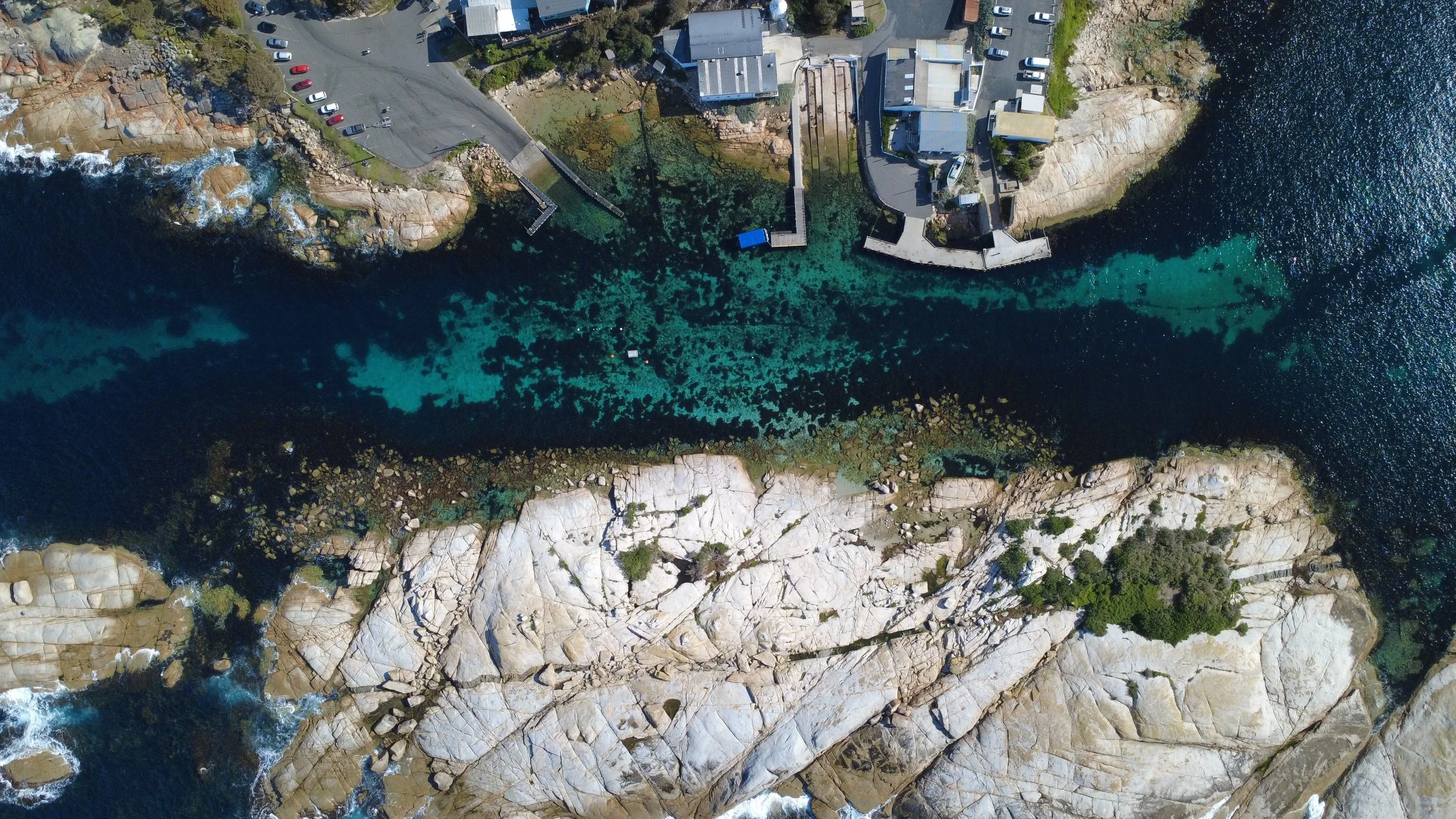
SHORT STORY: Governor
Set against the rugged coastline of Bicheno and beneath the enduring granite presence of Governor Island, Governor is a deeply atmospheric and emotionally resonant work of fiction that explores grief, memory, family, and the quiet resilience required to continue after loss. Beginning in the years following the Second World War and extending across generations, the story follows widowed fisherman Paddy Spencer and his daughter Olive as they attempt to navigate a life forever altered by the death of their wife and mother, Clare.
As the rhythms of daily life continue around them, boats leaving the bay before dawn, weather moving across the bay, children growing older, and seasons passing, the family discovers that grief rarely arrives as a single event. Instead, it settles into the spaces between conversations, into familiar rooms, routines and memories, shaping lives in ways both visible and unseen. Through Olive's eyes in particular, the story explores the fragile nature of remembrance, the fear of forgetting those we love, and the ways absence can remain powerfully present long after a person is gone.
At its heart, Governor is a story about endurance. About the small acts of care through which families hold one another together. About the inheritances passed quietly between generations, not through possessions or words, but through memory, example and love. Set within a landscape shaped by deep time and ancient granite, the story draws subtle parallels between human lives and the enduring forces of the natural world, suggesting that both people and places bear traces of what came before.
Tender, reflective and deeply connected to place, Governor is ultimately a meditation on memory, belonging and the enduring relationship between family, landscape and the lives that continue after loss.
THE SEAM: LE GULCH
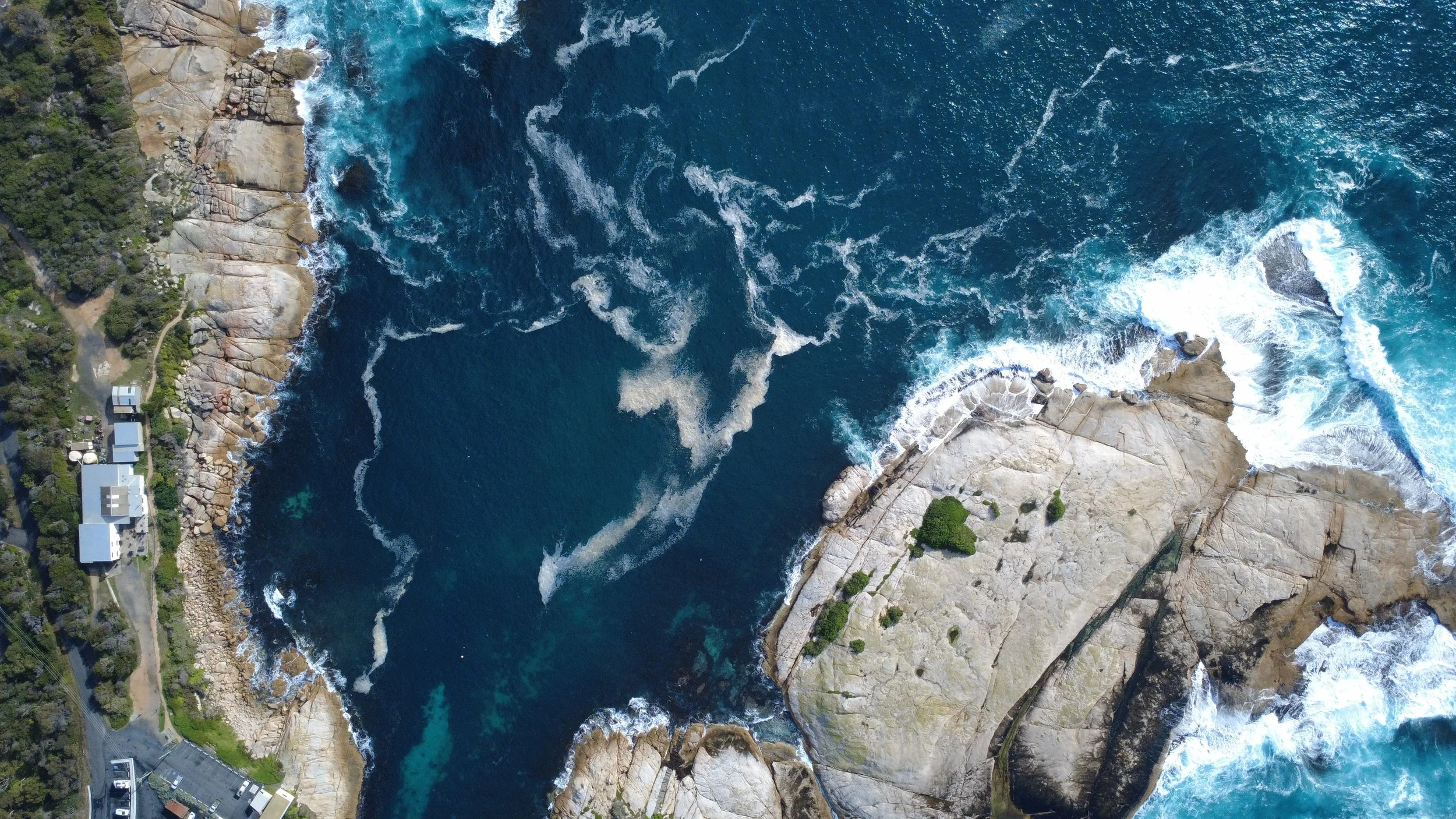
Some buildings seem to absorb the lives lived within them. They gather stories the way harbour water gathers reflections, holding traces of what came before long after the people themselves have moved on. Standing beside the Gulch, beneath the granite presence of Governor Island, Le Gulch occupies one such building. Once a place where crayfish, abalone and scallops passed through on their journey to distant markets, later a winery overlooking the harbour, it has entered a new chapter as a gathering place for locals and visitors alike. Through an intimate conversation with Shelley Bickerstaff and Myles Franklin, this edition of The Seam explores stewardship, hospitality and the privilege of becoming part of a story that began long before them and will continue long after.
CYCLONE YOLANDE - Editorial
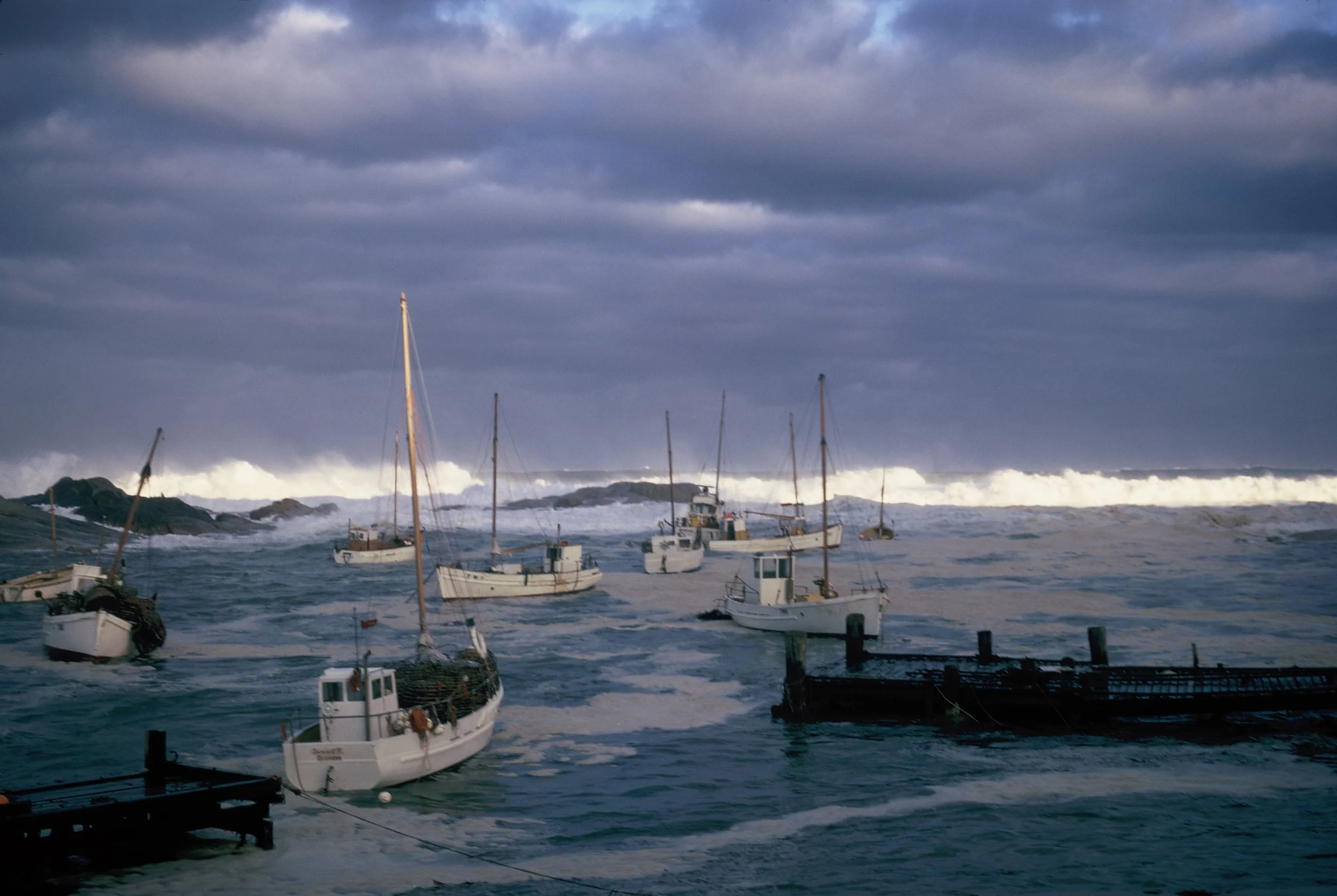
In April 1972, an extraordinary ocean swell generated by Cyclone Yolande struck Tasmania's east coast, transforming the normally sheltered waters of the Gulch into a place of chaos and destruction. Drawing on historical accounts, coastal science and a remarkable collection of family photographs taken during the event, this feature explores how wave energy moved through the landscape, overwhelming the harbour's natural defences and testing the protective influence of Governor Island itself. It is both a study of the forces that shaped Bicheno and a reminder that even the most familiar coastlines remain part of a larger and more powerful ocean.
THE QUIET THAT HOLDS US
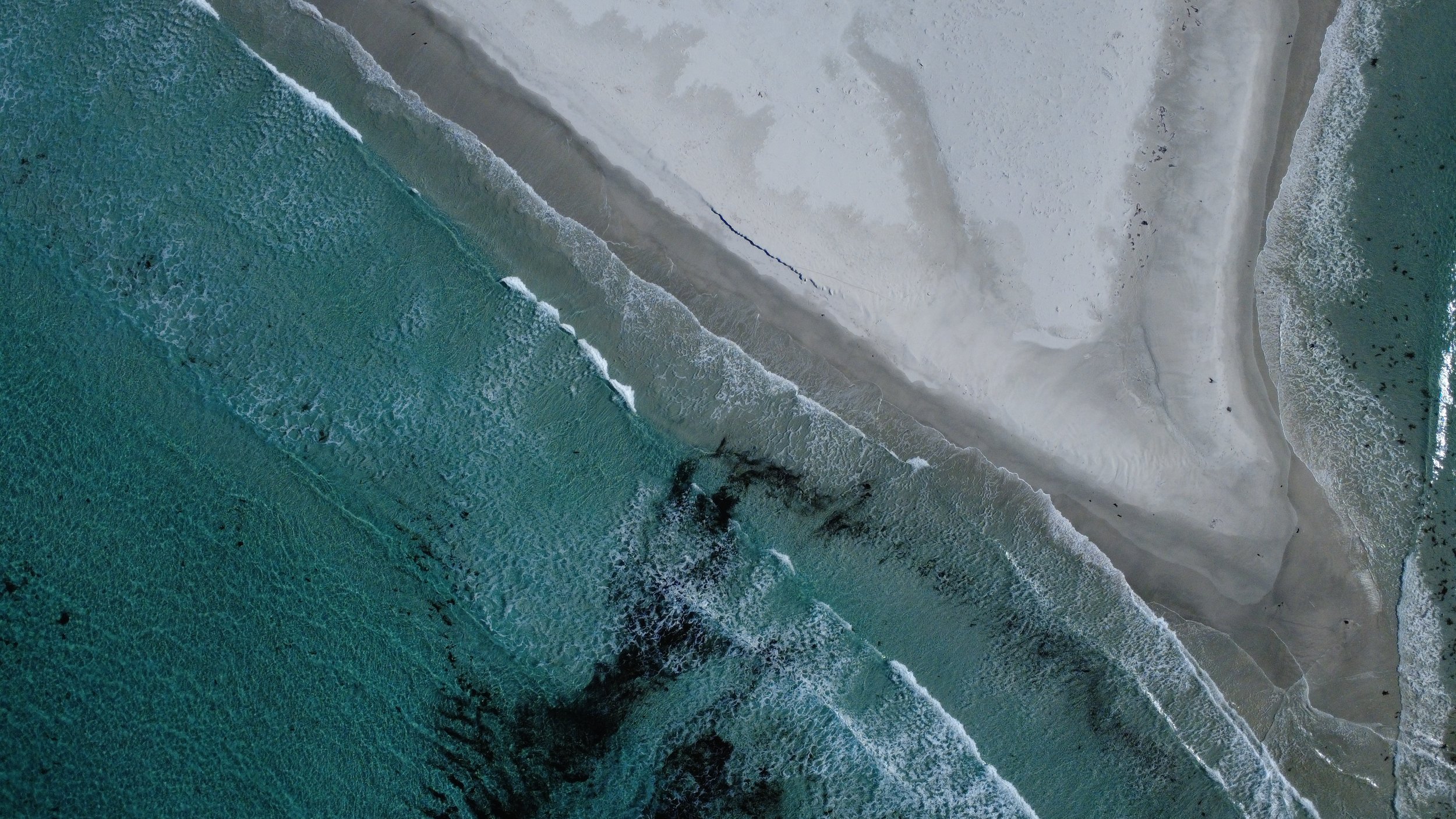
Bringing the edition to a close, this final reflection considers what Governor Island, Diamond Island, deep time, memory and the sea might teach us about the increasingly rare act of paying attention. Moving beyond history and landscape, it explores why certain places continue to hold us so completely, and how wonder, curiosity and presence remain essential ways of understanding both the world around us and our place within it.